
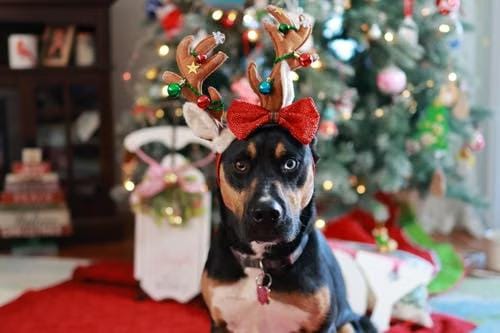
Dogs notice the holidays before we think they’ve started. Furniture shifts. Boxes appear near the tree. Food smells hang in the kitchen. People come through the door carrying bags, coats, children, and attention that keeps moving around the room.
For a dog, a familiar home can suddenly ask a lot. Good holiday safety tips for dogs keep the day recognizable. Your dog does not need to greet every visitor or stay beside the family all evening. They need safe choices, predictable care, and somewhere to go when the house becomes too much.
Keep the Familiar Parts of the Day Intact
Meals, medication, walks, bathroom breaks, and bedtime give your dog’s day its shape. When the household schedule changes, try to keep those parts close to their usual times.
That simple consistency can help with keeping dogs calm during holidays. If your dog normally walks before dinner, keep the walk instead of postponing it until guests leave. Familiar timing gives them something steady while the house feels different.
A pre-gathering walk can help too, but you don’t need to exhaust your dog. Let them sniff and move at their normal pace. For holiday stress in dogs, a familiar outing often works better than a frantic attempt to burn off energy.
Food Trouble Often Starts With One Small Bite
Holiday food rarely stays at the table. Appetizers land on coffee tables, children wander with snacks, and half-finished plates sit within reach.
Food is one of the easiest holiday hazards for dogs to miss. Chocolate, grapes, raisins, onions, garlic, xylitol, alcohol, cooked bones, and some rich foods can cause serious problems. Trash needs attention too, especially when it contains bones, wrappers, skewers, or scraps.
For better dog holiday safety, give guests one rule: no food from plates. Keep approved dog treats nearby if people want to offer something. That removes the guesswork behind “just a little bite.”
If your dog eats something questionable, call your veterinarian or a pet poison service promptly rather than waiting for symptoms.
Look at Decorations From Dog Height
A decorated room can offer plenty for a curious dog to investigate. Ribbon trails across the floor. Ornament hooks hang at nose level. Electrical cords sit behind furniture. A low candle only needs one interested nose or wagging tail.
One of the simplest holiday safety tips for dogs is to check rooms from your dog’s height. Look under tables, around the tree, beside outlets, and near gift bags. Move small or breakable items higher and secure anything that can be chewed, swallowed, pulled, or knocked over.
Dogs who steal objects or chew when excited may need a gate when nobody is watching. That small boundary can prevent several common holiday hazards for dogs without requiring constant supervision.
The Front Door Becomes a Weak Spot
A dog does not have to be an escape artist for an open door to become a problem. Someone carries in food, a child runs back to the car, and nobody notices the dog standing near the entry.
Good pet safety during holiday gatherings includes deciding what happens during arrivals and departures. Your dog can wait behind a gate, stay with one adult on leash, or rest elsewhere until the entryway settles.
Check that identification information is current as part of dog holiday safety. Guests should also know that they cannot leave exterior doors open, even if their dog usually keeps its distance.
Your Dog Gets a Vote on Guests
A social dog may still reach a point where they have had enough. A cautious dog may feel pressure long before a visitor notices.
Look for holiday stress in dogs in small changes. Pacing, hiding, panting when the room is cool, lip licking, yawning, pinned ears, refusing treats, trembling, or repeatedly leaving can all mean your dog needs space.
Excitement can spill over too. Barking, jumping, mouthing, racing around, or ignoring familiar cues can point to overstimulation. Keeping dogs calm during holidays sometimes means ending an interaction before the dog loses the ability to settle.
If your dog walks away, let them. Ask guests not to follow, hug, wake, or call them back. For pet safety during holiday gatherings, children should be supervised around the dog, especially near food, toys, and resting areas.
Give Them One Place Where Nothing Is Expected
A retreat works best when it already feels familiar. Use a bedroom, crate, gated room, or resting area your dog knows instead of setting up a new space that day.
Add water and familiar bedding. A useful holiday safety tips for dogs rule is simple: once your dog retreats, people leave them alone. A quiet room stops helping if guests keep opening the door to check on them.
Low background sound may soften voices, doorbells, television, and kitchen noise. If fireworks or seasonal sounds cause intense fear, ask your veterinarian for guidance ahead of time. Planning early can reduce holiday stress in dogs when noise starts outside.
Travel Changes the Safety Check
If your dog is coming with you, pack their regular food, medication, leash, waste bags, bedding, and identification. Familiar supplies can make an unfamiliar place easier to handle.
Before giving them free access, check the property for holiday hazards for dogs. Look at fences, balconies, stairs, trash, food within reach, other animals, and doors leading outside. Your host’s home may simply be set up differently from yours.
For dog holiday safety, decide where your dog will eat, sleep, and take breaks before people arrive. If car rides or unfamiliar places cause anxiety or nausea, speak with your veterinarian before traveling. Staying home with care may be the better choice for some dogs.
Let Your Dog Keep a Little Normal
The holidays may change the household, but your dog still benefits from the parts of the day they know well. Regular walks, quiet breaks, familiar meals, and time away from guests can all support keeping dogs calm during holidays.
If holiday plans make it harder to keep up with your dog’s usual walking routine, Belltown Dog Walker can provide one-on-one walks based on your dog’s pace, comfort, and daily needs. Contact Belltown Dog Walker to discuss care during the holiday season.